
A kite spool can look right in a supplier photo and still fail the order. The filled spool may be thicker than the retail pouch, the line end may disappear inside the pack, or the quote may describe a storage spool when you need a winder the customer can actually fly with. Settle those details before comparing prices.
This guide is for retailers, distributors and event buyers specifying spools or winders for recreational single-line kites. Start with the exact kite model and the line it uses. If you are still choosing the line itself, consult our kite string guide first. Then use the checks below to turn the winder into an orderable component.
Choose the format by how it will be used
“Spool,” “winder” and “reel” can mean different things in different catalogs. Ask for a photo of the filled part from both sides, a close-up of its grip and a short clip showing how the line comes off and goes back on. Label the format in the purchase specification so the photo and written quote describe the same item. For a real example of the distinction, see Premier Kites’ line and winder catalog, which lists line on spools separately from hand winders and non-mechanical yo-yo winders.
Storage spool or flat hand winder
A storage spool is useful when replacement line is sold by itself, but check whether it is intended to be held during flight or simply to dispense line onto another holder. A flat hand winder is a practical comparison sample for a giveaway or beginner kit where a slim package and easy setup matter. Check the grip with the line wound on: the amount of material around the center can change how comfortably the piece sits in the hand. If the line end tucks into a slot, test whether a new user can find and free it without pulling several wraps loose.
Hoop winder or rotating reel
A hoop or yo-yo winder gives buyers another non-mechanical format for a single-line accessory. Compare the grip opening, lip shape and depth of the winding channel with the line in place. A rotating reel adds parts such as a spool, hub, handle or guide. If the supplier mentions a lock, ratchet or brake, ask them to demonstrate each claimed function on the offered model. A catch that keeps a reel from turning in the package and a mechanism designed to control payout serve different purposes. Record which function you need, and review the supplier’s use limits for the complete setup.
Specify usable capacity with the actual line
“Holds 100 m” is incomplete unless the quote specifies which line. Diameter, construction and how the line is wound affect the space it takes up. Give each bidder the same line reference: construction, nominal diameter, rated strength, target delivered length and compatible kite SKU. Ask them to quote the length on the delivered part separately from the maximum capacity claimed for the empty part. Record whether the quoted length includes any line reserved for the end attachment.
Approve the sample at the intended fill. Check whether the wraps stay below the rim and whether the line can exit without rubbing a flange, slot or guide. Pay out and rewind the line under the supplier’s recommended conditions, then repeat with one of the production-packed samples. If the line only fits when an experienced operator makes unusually even layers, a buyer may see overflow or snagging after ordinary use. Agree with the supplier how to measure delivered length and what fill appearance will be acceptable. Keep a labeled example of the approved fill alongside the empty part drawing.
Set acceptance checks for the pre-production sample
Ask for a winder from the intended production tooling, wound with the specified line and fitted with the production hardware. A sample made with substitute line or an unfinished handle can help choose a concept, but it cannot settle the final fill or fit. Use the same checks across competing samples:
- Open and start: Have someone who has not seen the sample open the pack and locate the line end using only the supplied instructions.
- Pay out and rewind: Look for binding, crossed wraps and line slipping over the edge. Check whether a guide or handle obstructs the line path as the spool fills.
- Inspect contact points: Look for rough molding seams, sharp flash and damage to line where it passes a notch, guide or flange. On mechanical reels, check for rubbing and excessive play.
- Verify the approved setup: Have the supplier demonstrate the filled unit with the specified kite and document the configuration, use limits and any problems. Record sample and drawing revisions so a later part substitution triggers another review.
Use the kite quality control checklist to carry these observations into the inspection brief. Agree before production which findings require a replacement sample and which can be corrected and checked during production.
Check how the filled spool sits in the final pack
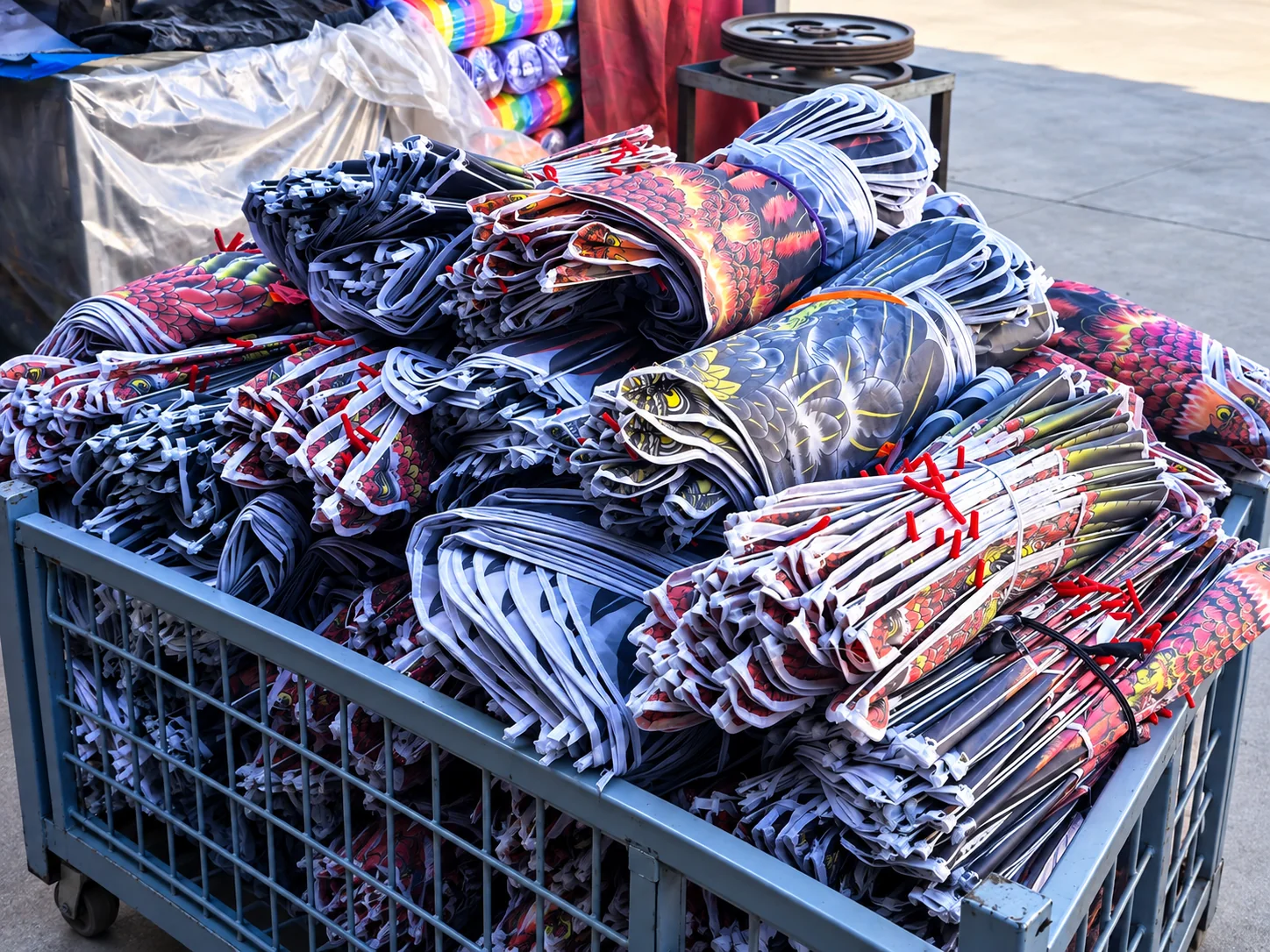
For a bundled kite, put the filled winder in the actual pouch with the folded sail, spars and instructions. Check where the reel or handle rests when the package is stacked, whether a protruding part presses into the sail, and whether the line end stays secured after unpacking. Have the supplier send a photo of the packed arrangement and a carton layout. The filled unit’s thickness can change how many kits fit in a carton, even when two options have similar footprints.
For a separately sold accessory, state whether it is an empty holder or comes loaded. For a loaded SKU, put the line length, rated strength and intended compatible kite class on the pack. For event distribution, try a short handout rehearsal with the proposed packaging: can staff identify the right kit at a glance, hand it over without loose components, and explain how to find the starting end? For other format choices, see our kite packaging guide.
Ask for quotes on comparable configurations
Send your supplier one brief with the kite model, expected use, requested holder format, a dimensional envelope for the filled unit, line specification, color count and packaging format. If the part needs branding, mark the logo location on a drawing and request an applied proof so the mark can be checked on the filled unit. Ask for separate quotes for an existing part, a custom color and a new molded design if each could work. Confirm whether minimums apply by part, color, line combination or retail pack, and whether a replacement pack can be ordered separately.
Request sample, approval, winding and packing dates separately. A delivery estimate for an empty stock spool may not apply to a filled, printed retail pack. If one bidder quotes only the plastic part and another includes line, winding, inspection and packaging, ask both for the same finished configuration before comparing the amounts.
Frequently asked questions
Is a kite spool the same as a kite reel?
Catalog names vary. A spool may be a basic line holder or the winding part of a reel. Specify whether the buyer needs storage, a hand-held winder or a rotating mechanism.
Can one winder serve several kite models?
Possibly. Verify fit and use with each approved kite and line combination. Where line varies by model, label the packs clearly and confirm capacity for each version.
Can I order the spool without line?
Ask for both empty and pre-wound quotes. If buying empty holders, provide the exact line you plan to load and approve a filled sample before ordering.
See our wholesale kite accessories and flying lines, or send KiteSourcing your kite model, line specification, quantity and packaging brief to discuss samples and comparable options.