
A kite tail is more than decoration. On kite models designed to use one, the tail adds drag behind the sail and can help the kite point more consistently into the wind. Its length, width, material, number and attachment position affect flight behavior, visual impact, packing and cost.
There is no universal tail specification for every kite. The correct setup must be tested with the final sail, frame, bridle, line and expected wind range. This guide explains what buyers should specify when sourcing kites and replacement tails.
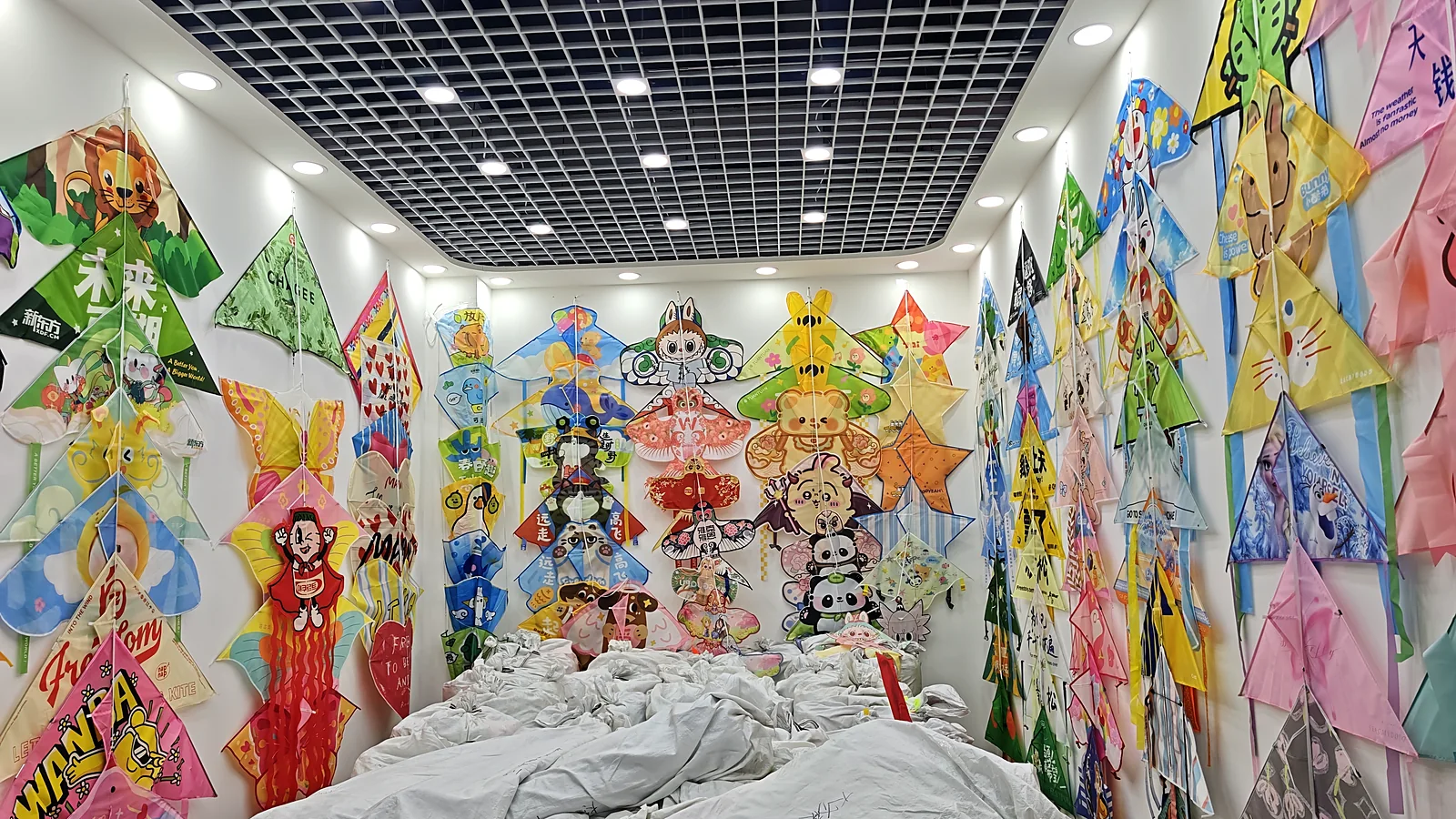
What does a kite tail do?
A tail creates drag behind the kite. That drag can reduce unwanted turning or side-to-side movement and help keep the nose oriented correctly. It does not create stability by magic: a poorly assembled frame, incorrect bridle or unsuitable wind can still cause unstable flight.
Some delta, parafoil and specialist kites are designed to fly without a tail. Many diamond, children’s, promotional and decorative models use one or more tails. Always evaluate the complete design rather than adding a tail only because it looks attractive.
Common kite tail formats
Single ribbon tail
A long fabric or film strip attached near the lower point is simple, recognizable and easy to pack. Width and material weight determine how much drag it produces.
Two ribbon tails
Two tails create visual symmetry and can be positioned at lower corners or at approved attachment points. Both tails should match in length and material unless the design intentionally uses an asymmetrical arrangement.
Loop or bow tail
A looped line carrying fabric bows distributes drag over a longer distance. This format can suit traditional diamond kites and classroom projects, but it requires more components and preparation.
Streamer sets
Several narrow streamers create movement and color with less material per strip. They are often selected for events or children’s products. Attachment strength and tangling during packing require attention.
Inflatable or shaped tails
Large display kites may use windsocks, tubes or shaped accessories. These products can create substantial drag and load, so experienced operators and model-specific engineering are important.
How long should a kite tail be?
Tail length depends on kite geometry, sail area, material weight and wind conditions. A small lightweight diamond kite may use a relatively narrow tail several times the height of the kite, while another model may use two shorter streamers. A large visual tail is not automatically more stable.
For a new custom order, describe the desired appearance but ask the factory to recommend and test the functional length. Record the approved tail length in the product specification after sampling. Avoid phrases such as “standard long tail” because different factories may interpret them differently.
Tail width, weight and material
- Polyester ribbon: durable, colorful and suitable for repeated use when correctly finished.
- Lightweight nylon: useful for coordinated fabric products and larger decorative tails.
- PE film: economical and lightweight for selected promotional or children’s products.
- Nonwoven material: can provide economical color options but should be checked for tearing and edge quality.
A wider or heavier tail normally produces more drag, but the effect depends on airflow and total length. Material should resist fraying, color transfer and tearing at the attachment. If the tail carries printing, confirm how ink coverage changes weight and flexibility.
One tail, two tails or multiple streamers?
The number of tails should follow the tested construction. Two tails can create an attractive balanced appearance on promotional and event kites, but they add material, labor and packing volume. Multiple streamers may tangle if folded carelessly or combined with loose flying line.
Specify each tail separately: quantity per kite, finished length, finished width, material, color, print, attachment and packing method. If two colors are used, state whether every kite receives both colors or whether colors vary by product.
Attachment methods
Tails may use sewn loops, knots, plastic connectors, hook-and-loop fasteners or model-specific attachment tabs. A detachable tail can make packing and replacement easier, while a permanently attached tail reduces missing parts. The connection should be simple enough for the intended user and strong enough for the model’s tested wind range.
For children’s products, loose small parts and long cords require market-specific safety review. Intended age, labeling and applicable standards should be confirmed before materials are finalized.
How to recognize an unsuitable tail setup
- The kite continuously turns to one side despite correct assembly.
- Two tails have visibly different lengths or weights.
- The tail wraps around the flying line or frame.
- The attachment tears the sail or detaches under ordinary use.
- The kite cannot climb because the tail creates excessive drag.
- The tail frays, transfers color or tangles during normal packing.
These symptoms can also come from the bridle, frame or wind. Flight testing should diagnose the whole product rather than changing the tail in isolation.
Kite tail specifications for a wholesale RFQ
- Kite type and assembled dimensions
- Number of tails per kite
- Finished length and width of each tail
- Material, weight and color reference
- Plain or printed tail
- Permanent or detachable attachment
- Individual folding or packing method
- Replacement-tail quantity, if required
- Target user and intended market
- Sample and flight-test approval requirement
Quality checks before mass production
Measure tail dimensions on the approved sample and compare production pieces within an agreed tolerance. Inspect cut edges, stitching, connectors, color matching and attachment strength. Test packing and unfolding because a correct tail can still create a poor user experience if it arrives tightly twisted.
Flight testing should use the final production-equivalent kite, line and tail. Test in appropriate conditions and record the approved configuration. For related components, visit our kite string and accessories page.
Frequently asked questions
Does every kite need a tail?
No. Some designs are engineered to fly without one. Use the configuration recommended and tested for the exact model.
Will a longer tail always make a kite more stable?
No. Extra length adds drag and weight and can reduce climb. Stability depends on the complete design and conditions.
Can a kite tail carry a logo?
Selected fabric tails can be printed, but narrow moving material may not provide good logo visibility. The print method and added weight should be tested.
Should replacement tails be ordered with the kites?
They may be useful for schools, rentals, events and specialist retailers. Confirm compatibility and pack them with clear part identification.
Request a kite and tail quotation
Send the kite shape, size, quantity, tail appearance, material preference, target market and destination. We can help prepare a clearer factory specification covering the kite tail, flying line, handle and packing. Request a quotation.
Kite tail troubleshooting
| Observed behavior | Possible tail-related cause | What to check |
|---|---|---|
| Kite repeatedly turns to one side | Unequal twin tails or an off-centre attachment | Compare length, weight and attachment position on both sides |
| Kite feels sluggish and will not climb | Tail may be too heavy or create excessive drag | Return to the tested tail specification; do not cut parts during flight |
| Kite darts or spins | Tail may be missing, tangled or unsuitable for a model designed to use one | Land the kite and inspect the complete setup |
| Tail knots during packing | Material and folding method are not matched | Add a tie, sleeve or separate compartment in the kite bag |
A tail should be validated with the exact kite, not selected from length alone. Specify each tail’s finished length, width, material, color, attachment and packing method. Replacement tails can be ordered as separate SKUs for retailers or activity organizers. See kite accessories and the Kite Guides library.
Need Tails, Lines or a Complete Kite Set?
For wholesale and custom programs, we can match tail dimensions, flying line, winders and accessories to the selected kite and packaging format.